
Floating Solar: Turning Reservoirs and Water Bodies Into Power Plants
Category: Solar Deployment Technology
Key advantage: No land acquisition required
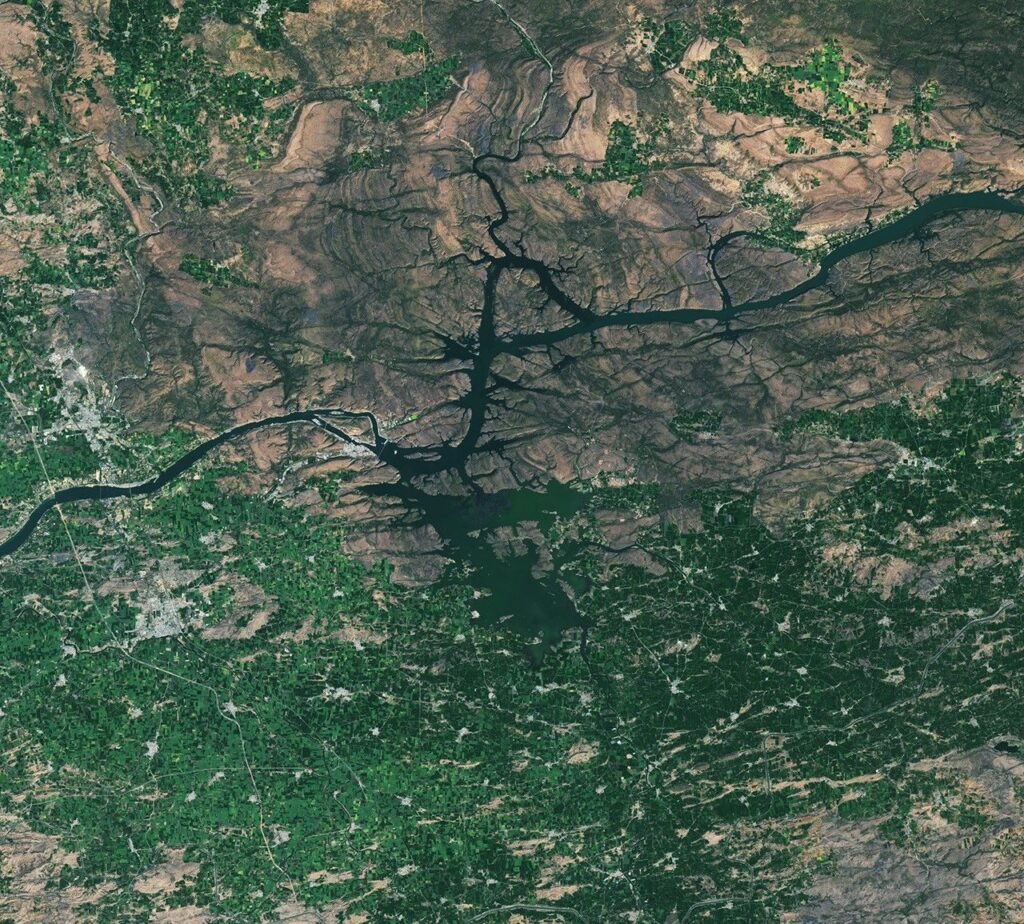
Floating solar photovoltaic (FSPV) systems mount solar panels on buoyant platforms anchored on reservoirs, irrigation canals, industrial water bodies, and hydropower dam surfaces. For a land-constrained and densely populated country like India, this sidesteps one of solar’s biggest practical bottlenecks: acquiring suitable land.
The cooling effect: Solar panels lose efficiency as they heat up, and floating installations benefit from the natural cooling effect of the water beneath them, which can measurably improve energy yield compared to an equivalent ground-mounted system in the same location, particularly during hot months.
Added benefit — evaporation reduction: Covering part of a reservoir’s surface with panels also reduces water evaporation, a meaningful secondary benefit for reservoirs used for irrigation or drinking water supply, especially in drought-prone regions.
Engineering considerations: Floating systems require specialized anchoring to handle water-level fluctuations, corrosion-resistant materials for the marine environment, and underwater or floating cable routing for grid connection — all of which add engineering complexity and cost compared to ground-mount, though this gap has been narrowing as the technology matures and more domestic EPC contractors gain experience with it. India has been rapidly scaling up floating solar capacity, including several projects on industrial reservoirs and hydropower reservoirs designed to combine solar and hydro generation on the same grid connection.