
String Inverters vs Microinverters: Choosing the Right Setup
Category: Solar Inverter Technology
Decision factors: Roof shading, budget, monitoring needs
The inverter converts the direct current (DC) a solar panel produces into the alternating current (AC) a home or the grid uses, and the choice of inverter architecture has a real effect on system performance, especially on roofs that aren’t perfectly uniform.
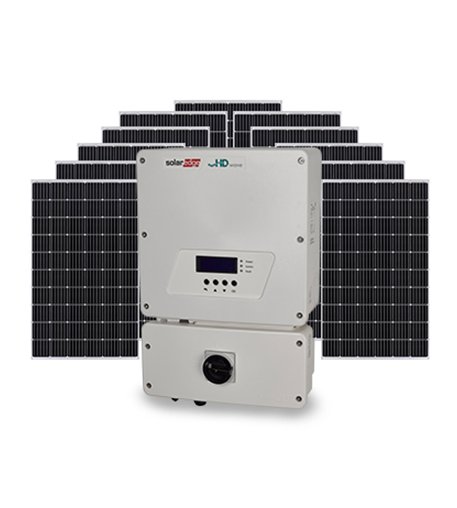
String inverters connect a series (“string”) of panels to a single central inverter. They are the most common and generally most affordable option for straightforward installations, but because panels in a string are electrically linked, shading or soiling on even one panel can drag down the output of the entire string — a meaningful drawback for roofs with partial shade from trees, chimneys, or neighboring structures.
Microinverters attach a small inverter to each individual panel, converting DC to AC right at the panel level. This means each panel operates independently — shading or a fault on one panel doesn’t affect the others — and it also enables panel-level performance monitoring, letting a homeowner spot an underperforming panel immediately rather than guessing at a whole-string problem. The tradeoff is higher upfront cost per watt compared to a string inverter setup.
Power optimizers offer a middle path — retaining a central string inverter but adding a small optimizer at each panel to mitigate shading losses at a lower cost than full microinverters, without full independent per-panel monitoring.
Practical guidance: A roof with no shading and a simple layout is usually well served by a standard string inverter at the lowest cost. A roof with partial shade, multiple orientations, or a strong preference for panel-level monitoring is a stronger candidate for microinverters or power optimizers, despite the higher initial cost.